
Contrails are real - they're not a government conspiracy to spray chemicals (big surprise, huh?!?). But, did you know there are two types of contrails? Aircraft can generate both aerodynamic contrails and exhaust contrails.
Contrails are "condensation trails," and they have nothing to do with chemicals. They occur when water condenses into a cloud - in either liquid or ice-crystal form. Contrails come in two varieties: aerodynamic and exhaust contrails.
Aerodynamic Contrails
Aerodynamic contrails occur when moist air cools due to lowered pressure, condensing humidity in the air and forming a contrail cloud.
What causes an aerodynamic contrail? It can come from any surface which lowers the air pressure - but it's commonly caused by your propellor or wings. When an airfoil decreases air pressure, it also decreases the air's temperature. If the humidity's high, the drop in temperature and pressure can lower the air's temperature past the dew point and form a contrail cloud.
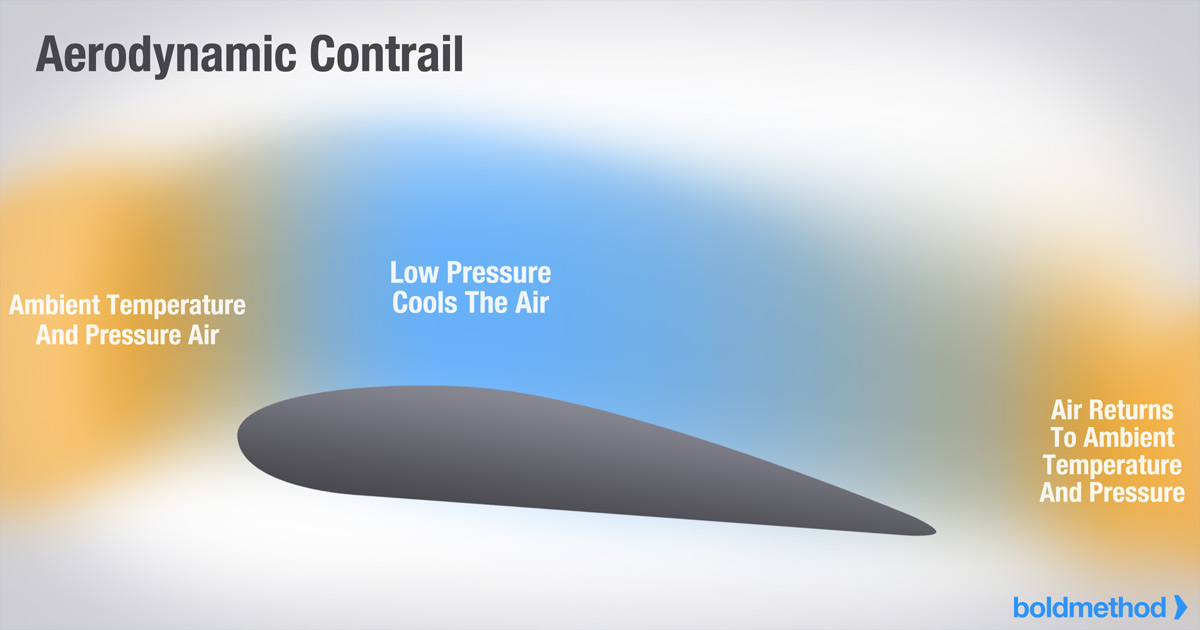
The more your wings decrease pressure, the greater the temperature drop. So, an aircraft with high wing loading can generate large aerodynamic contrails. An F-15 pulling G's and a 737 at a high angle of attack are great examples of this effect.
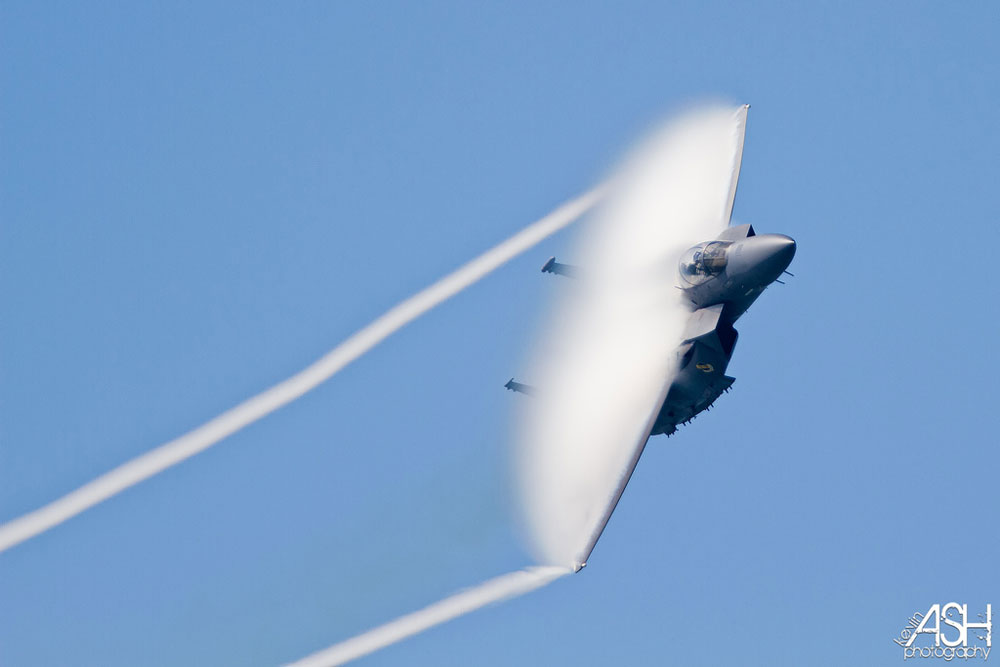
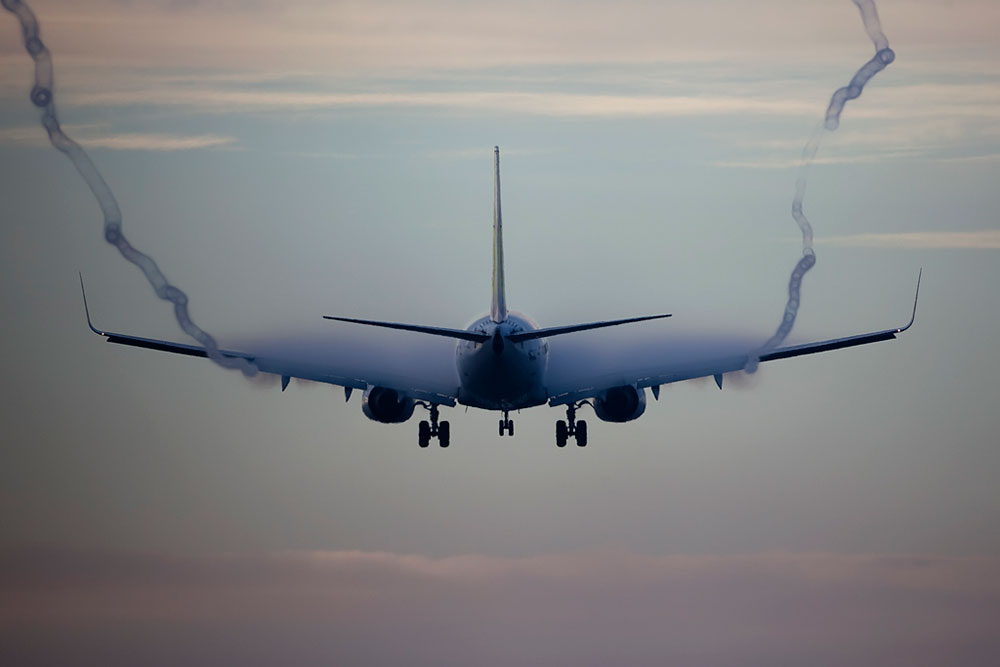
Aerodynamic contrails don't last long. As soon as the aerodynamically cooled air comes back up to ambient temperature, the contrails dissipate. That's why aerodynamic contrails are so short lived.
Exhaust Contrails
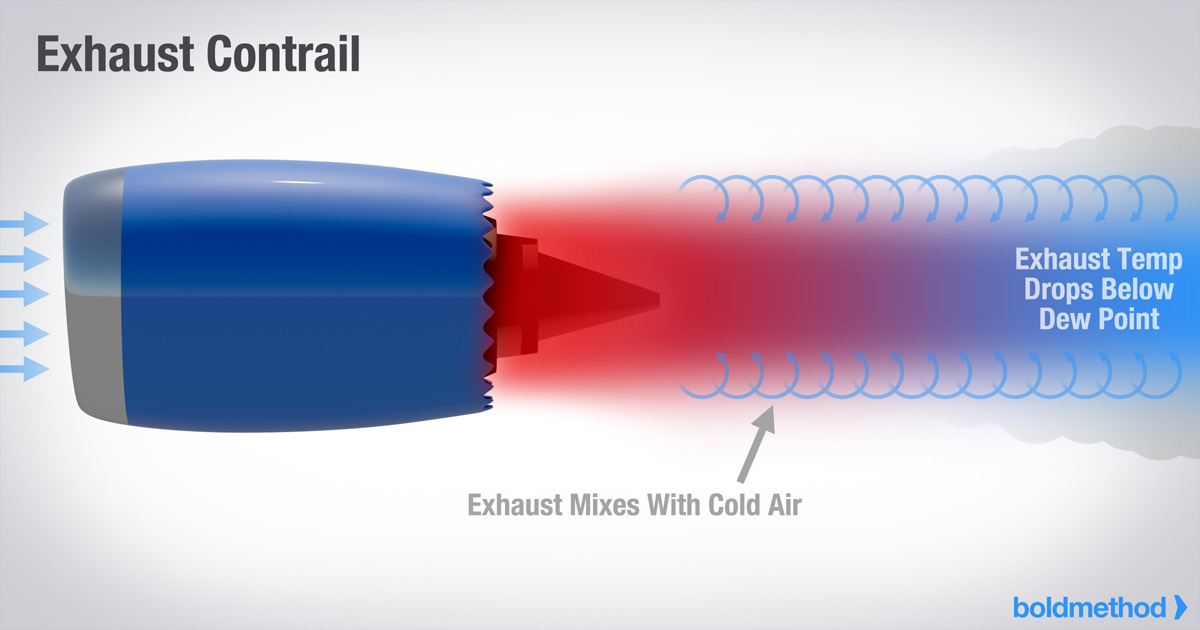
Exhaust contrails are more common, and they're usually seen behind aircraft cruising in the flight levels. They form when hot, moist air exiting an engine mixes with extremely cold air - condensing the exhaust's moisture.
How cold does the air need to be? It varies. The ambient air temperature has to drop below -24 degrees Celsius at sea level, and reach below -45 degrees Celsius at FL500 for exhaust contrails to form. A cirrus cloud layer can indicate that conditions are right for exhaust contrails.
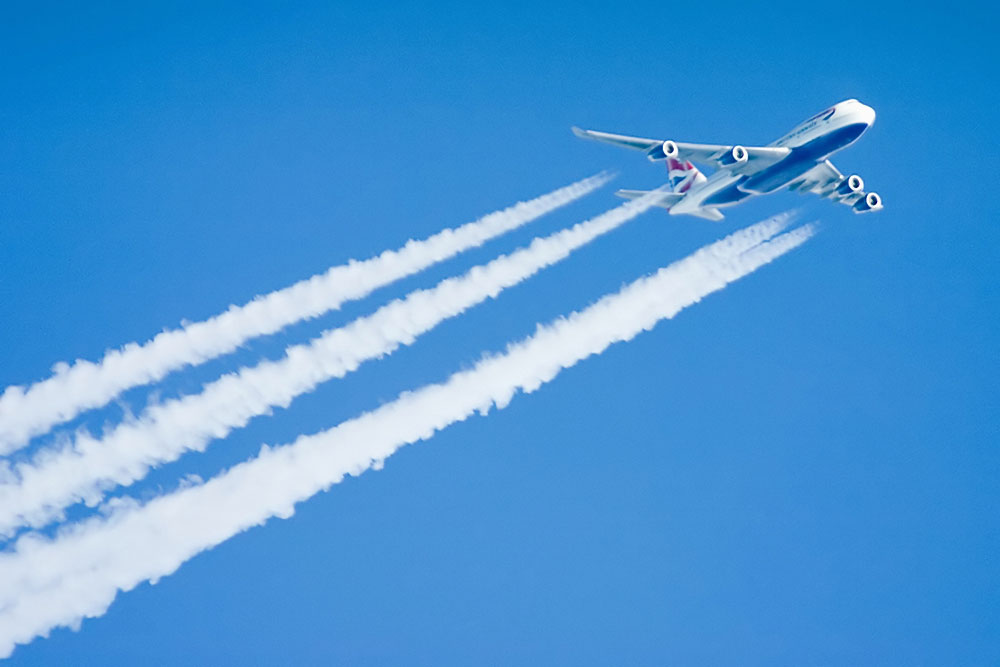
Here's an example of exhaust contrails forming at low altitude. In this case, the temperature's -45 degrees Celsius.

Exhaust and Aerodynamic Contrails Can Happen Simultaneously
Aircraft can produce both types of contrails at the same time. When an aircraft is cruising at a high flight level where the air is thin, its high angle of attack can produce an aerodynamic contrail if the humidity's high. If the temperature's extremely cold, which usually is the case in the high flight levels, it can create exhaust contrails, too. You'll see the aerodynamic contrail disappear quickly, but the exhaust contrail will last considerably longer.
Kent Wien / Flickr
reference: http://www.boldmethod.com/learn-to-fly/weather/contrails/
【 30秒快速報名機師考取攻略講座】
https://goo.gl/sxedVG
【立即預約1對1諮詢】
http://goo.gl/forms/

想跟真人教官獻上一對一互動嗎?線上即時回覆最新考情資訊請加
Line 好友ID:@fttw (小老鼠fttw)


請先 登入 以發表留言。